Arcane Echoes
A thinking tool, not a prediction service.
How it works
Evening: A short email asks "What's on your mind tonight?" You write whatever you're wrestling with.
Overnight: Two cards are drawn from 169 variants. An AI reader frames your question through their specific lenses — one symbolic, one practical.
Morning: Your reading arrives by email. Your question, two cards, an insight to sit with.
"The cards don't predict the future. They provide a random symbolic perspective on a question you chose to examine."
The Deck


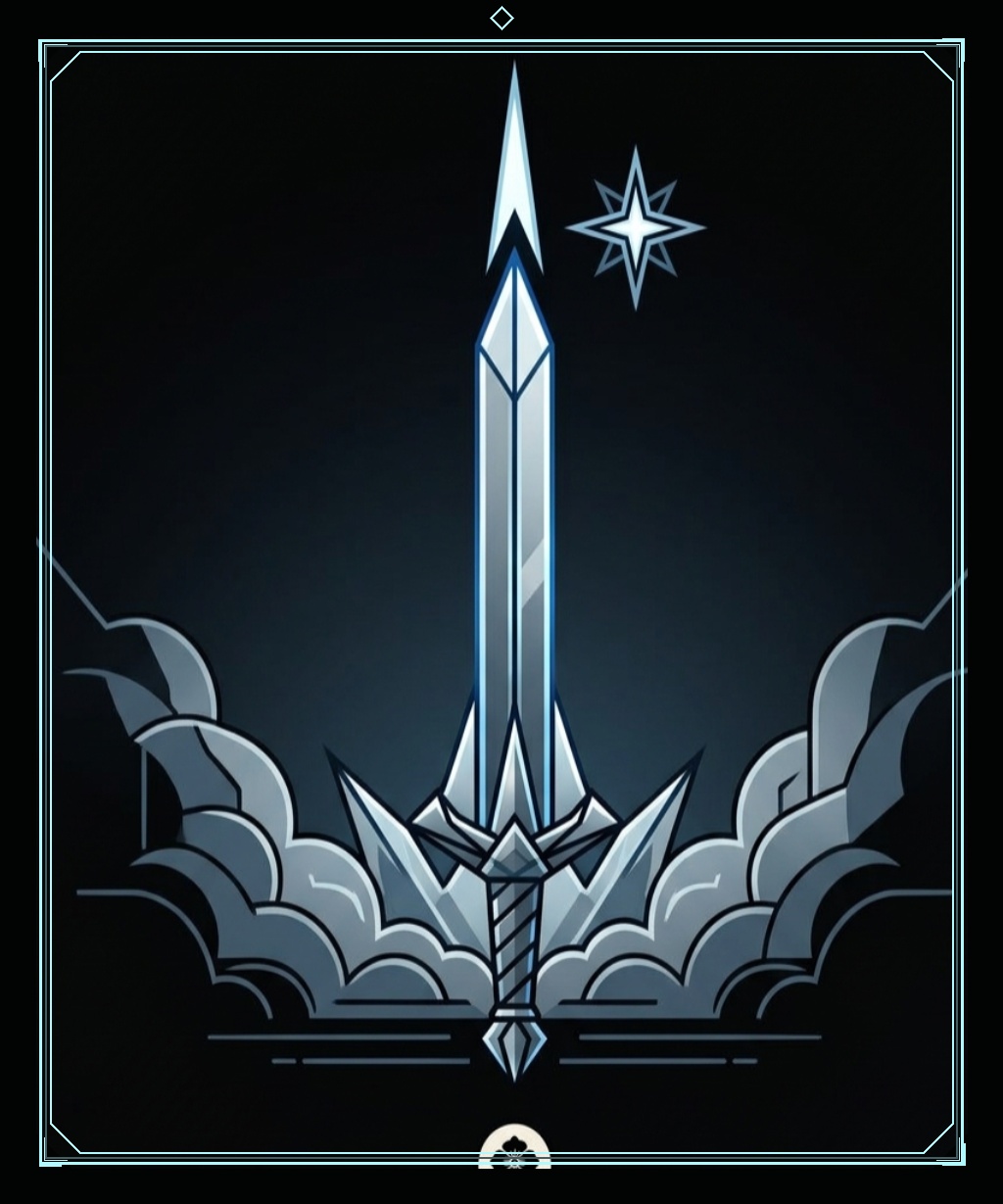
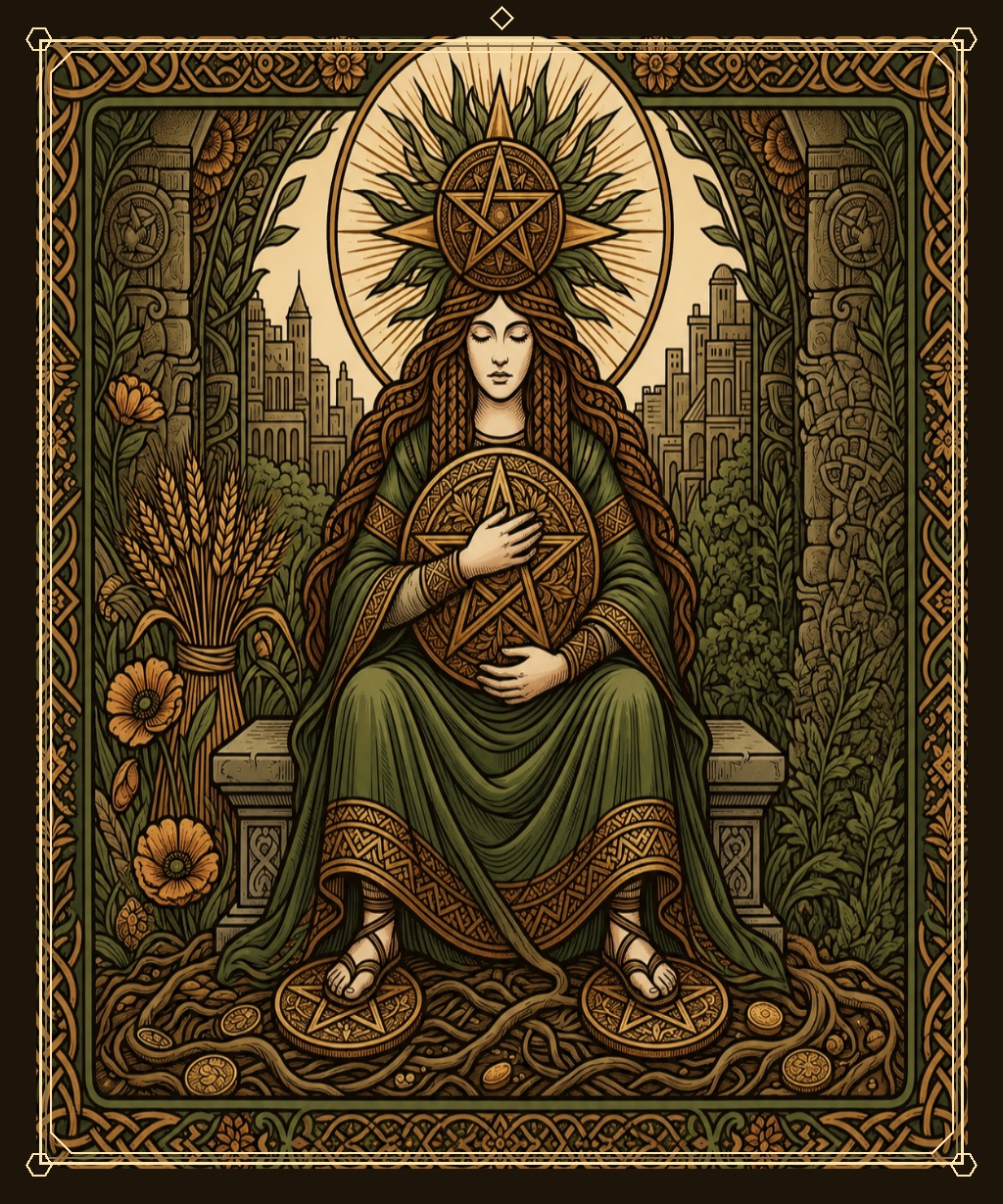

169 variants across 78 cards. Each carries a distinct perspective.
What a reading looks like
You asked:
"How do I stay consistent with my creative practice when the initial excitement wears off?"
The Sun — Phoenix Triptych
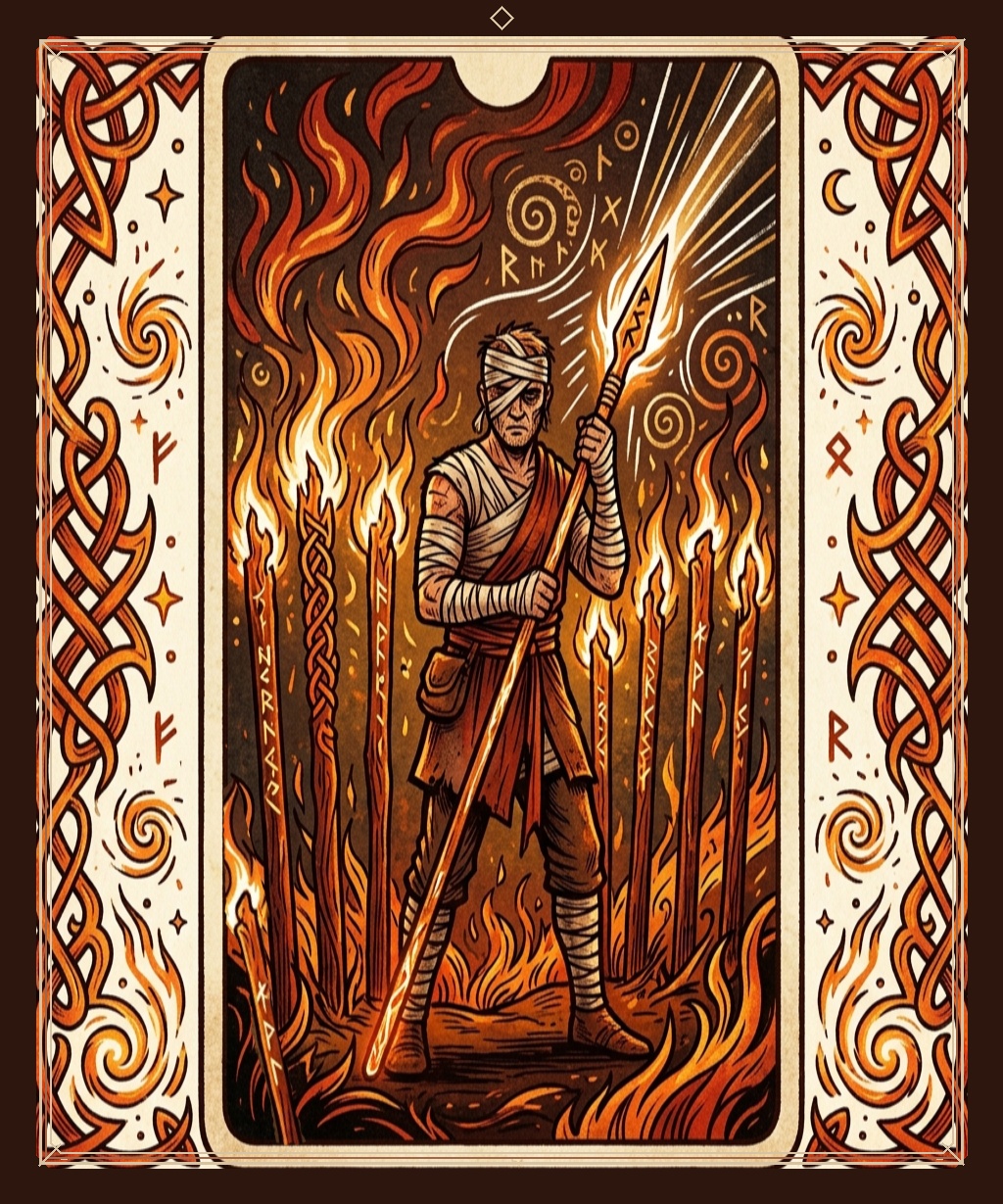
Nine of Wands
The Shape of the Question
The Phoenix Triptych offers an interesting mirror here: creation that cycles through death and rebirth. Your question carries an implicit grief—the loss of that initial luminescence. But notice what the triptych structure suggests: not one sustained flame, but three distinct moments of burning. There's something worth examining in what happens between those fires. The excitement that ignites a practice and the consistency that sustains it may be asking different things of you entirely. One is about discovery; the other is about deepening. The Sun doesn't ask the Phoenix to remain in its ecstatic ascending moment forever. It witnesses the whole cycle.
The real texture of your question might not be about staying consistent, but about what consistency costs once novelty fades. There's often a hidden negotiation happening: What part of you still wants the initial rush? What part is learning to value something quieter—the steady heat rather than the spectacular blaze?
Try This Today
Take one recent session of your creative practice—a time when you showed up, but without the early electricity. Sit with this honestly: What was the actual cost? Not "I felt uninspired" but what did it genuinely demand of you in that moment? Your attention? Your tolerance for mediocrity? Your willingness to keep going without external reward? Name that cost specifically.
Now hold the Nine of Wands reframe: something has already been built in you through all those sessions. The practice hasn't failed; it's accumulated. What shifts in how you approach the next session if you imagine you're not starting over—you're at nine, and the texture of what you're building is already determined by eight before it?
What would feel different about showing up tomorrow if you weren't measuring the work against that first moment of excitement, but against the quiet resilience that nine repetitions have already created?
Actual reading. Unedited.
You asked:
"I have so many ideas but can't seem to pick one and take it all the way to completion. Why?"

The World — Winged Atlas
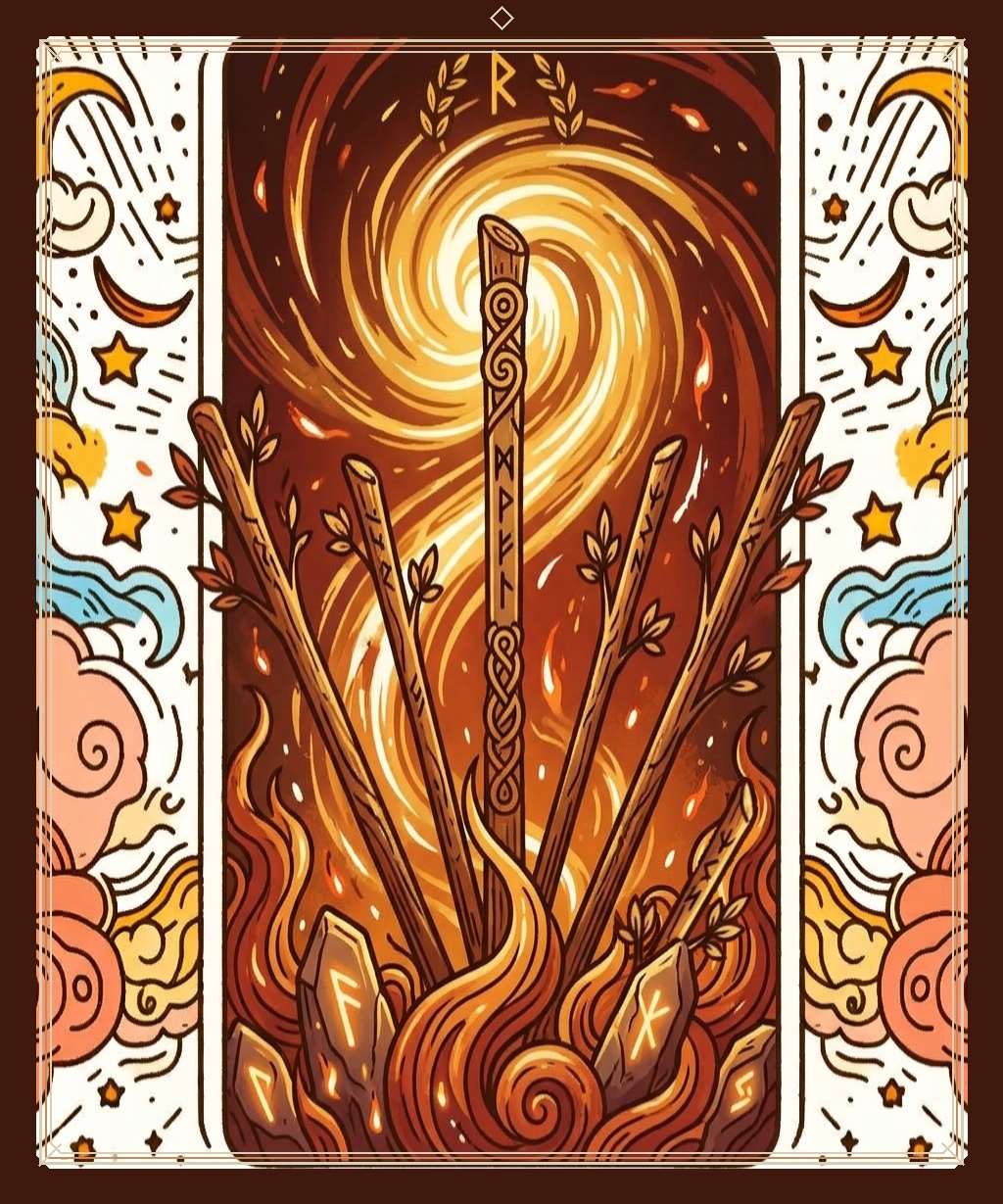
Six of Wands
The Shape of the Question
The World as Winged Atlas suggests a particular tension: you're holding something vast—many ideas, each complete in itself, each a miniature cosmos. Atlas carries the weight of spheres. But he has wings. There's a paradox here between the weight of completion (finishing one thing fully) and the impulse to lift off, to try another direction. The question beneath your question might be: What makes an idea feel finished to me? Because completion isn't just about effort—it's about the moment when something feels like a whole world, not just a fragment.
The minor key in this is something worth noticing: you haven't said the ideas never get started, only that they don't go "all the way." That's different. It suggests you're perhaps testing each idea, tasting it, then setting it down to taste another. That's not quite indecision. That feels more like someone standing in a marketplace of possibilities, wondering which one deserves to be carried all the distance.
Try This Today
Here's a concrete lens: Take one idea—not your "best" one, just one that's nearby in your mind right now. Imagine it's finished. Not perfect; finished. Now sit with this question genuinely: If this were complete, who would you tell first? Not for validation, necessarily, but because their understanding would mean something specific to you. A mentor? A peer who'd recognize what you were attempting? Someone who doubted it was possible? Notice what that answer tells you—because the person we imagine telling first often reveals what completion actually means to us, beneath the surface.
Once you have that name or type of person, flip it: What would their recognition require? Would they need to see the whole thing, or just understand the core of what you were reaching for? That distinction might reshape what "all the way to completion" actually needs to be.
What shifts when you imagine telling that specific person—not someday, but right now, at whatever stage one of your ideas is actually in?
Actual reading. Unedited.
Choose your plan
Casual
Daily
Daily · Annual
Card required upfront. But we only charge if you explicitly tell us to continue. No response within 24 hours after your trial ends? We cancel automatically. No charge, no hassle, no forgotten subscriptions.